
COMPLIANCE • XARVA OFFERING
Compliance-native settlement without bolting on extra stacks
Xarva is designed as a compliance-native Tier-1 Layer-1 chain for regulated industries. Instead of adding KYC/AML and Travel Rule tools on top of the chain, compliance is built into the architecture itself — from the virtual machine (XCVM) to the developer kit (XDK) and validator incentives.
This page explains how compliance is embedded into Xarva’s design. It is a high-level design description, not legal or regulatory advice.
What “compliance-native” means in practice
For most Layer-1 chains, compliance is handled off-chain by separate vendors and custom integrations. Xarva takes a different approach. Compliance is treated as a first-class part of the protocol and developer experience.
XCVM • ON-CHAIN POLICY
Policy-aware virtual machine
XCVM lets smart contracts require identity checks, enforce jurisdiction rules, and emit structured audit events as part of normal execution — not as an afterthought.
XDK • DEVELOPER TOOLING
Unified compliance SDKs
The Xarva Developer Kit (XDK) exposes simple APIs for KYC, AML, sanctions and Travel Rule checks, with vetted providers behind a single interface.
PoU • VALIDATOR INCENTIVES
Rewards tied to useful, clean volume
Proof-of-Utility (PoU) increases rewards for validators that process verified settlements, stay highly available, and pass compliance audits.
How risk and controls are handled on Xarva
From an enterprise or investor perspective, the key question is simple: how does this chain reduce regulatory and operational risk compared to today's rails?
Identity & KYC / KYB
- • Onboard users and entities through KYC/KYB providers.
- • Link verified identities to wallet or account references.
- • Use XCVM policies to restrict access by jurisdiction or risk level.
AML & transaction screening
- • Transactions screened for sanctions and high-risk patterns.
- • Audit trails emitted as structured on-chain events.
- • Misbehavior can feed into PoU penalties and governance actions.
Travel Rule & auditability
- • Message formats aligned with emerging Travel Rule standards.
- • Ability to prove who initiated, who received, and how checks ran.
- • Exports that can plug into existing audit and reporting flows.
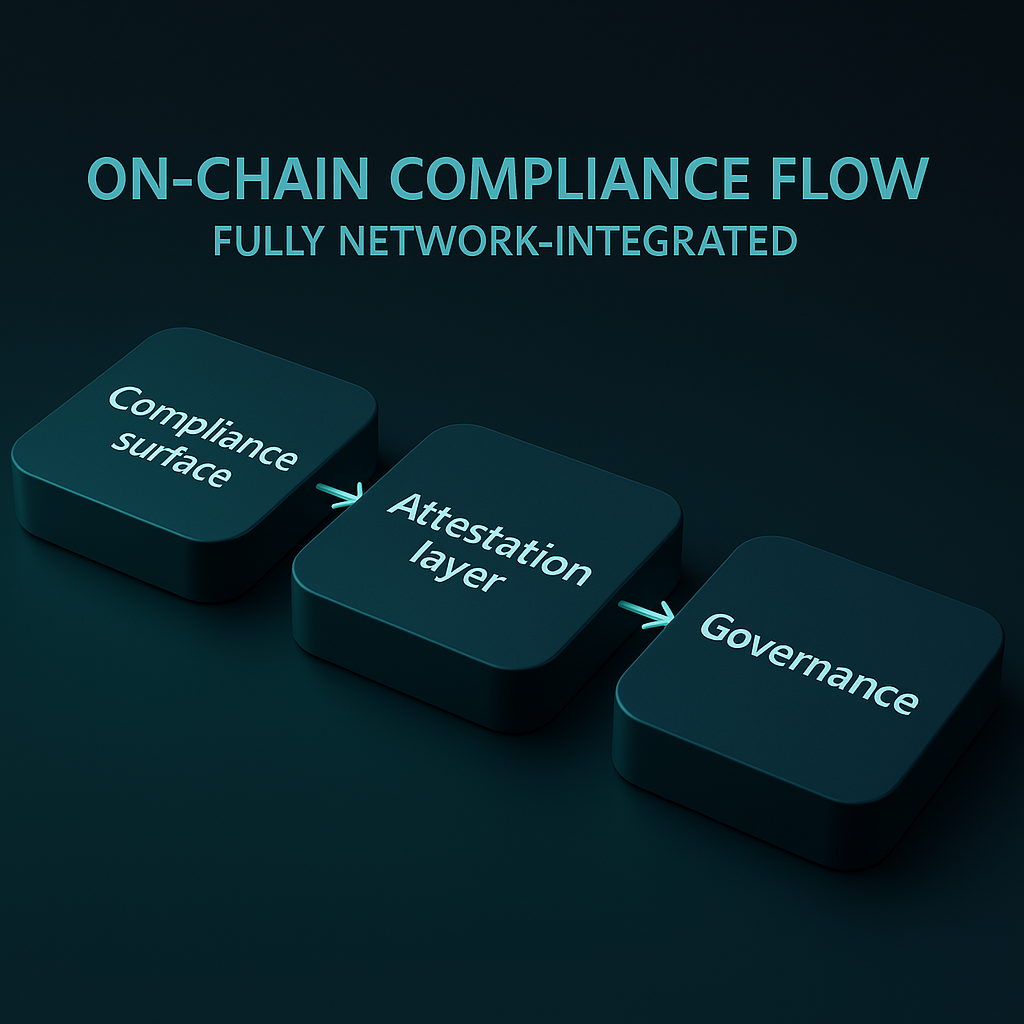
Architecture view: how policy, execution and data fit together
Under the hood, Xarva separates concerns: XCVM enforces policy, PoU orders and secures transactions, and modular data availability layers keep throughput high while preserving verifiability.
For developers
Integrate once via XDK and call policy-aware functions for KYC, AML and Travel Rule. The goal is to make the compliant path the easiest path — no need to manage multiple vendor contracts, keys and invoices.
For enterprises
Move from slow, multi-party reconciliation to near-real-time settlement with a clear compliance story: who transacted, what rules applied, and how those rules are governed over time.
For investors and strategic partners
Compliance is not a marketing tagline. It is built into the architecture, the SDKs and the validator incentive model. Xarva is designed to be a long-term settlement backbone for regulated industries, not a short-lived speculative chain.
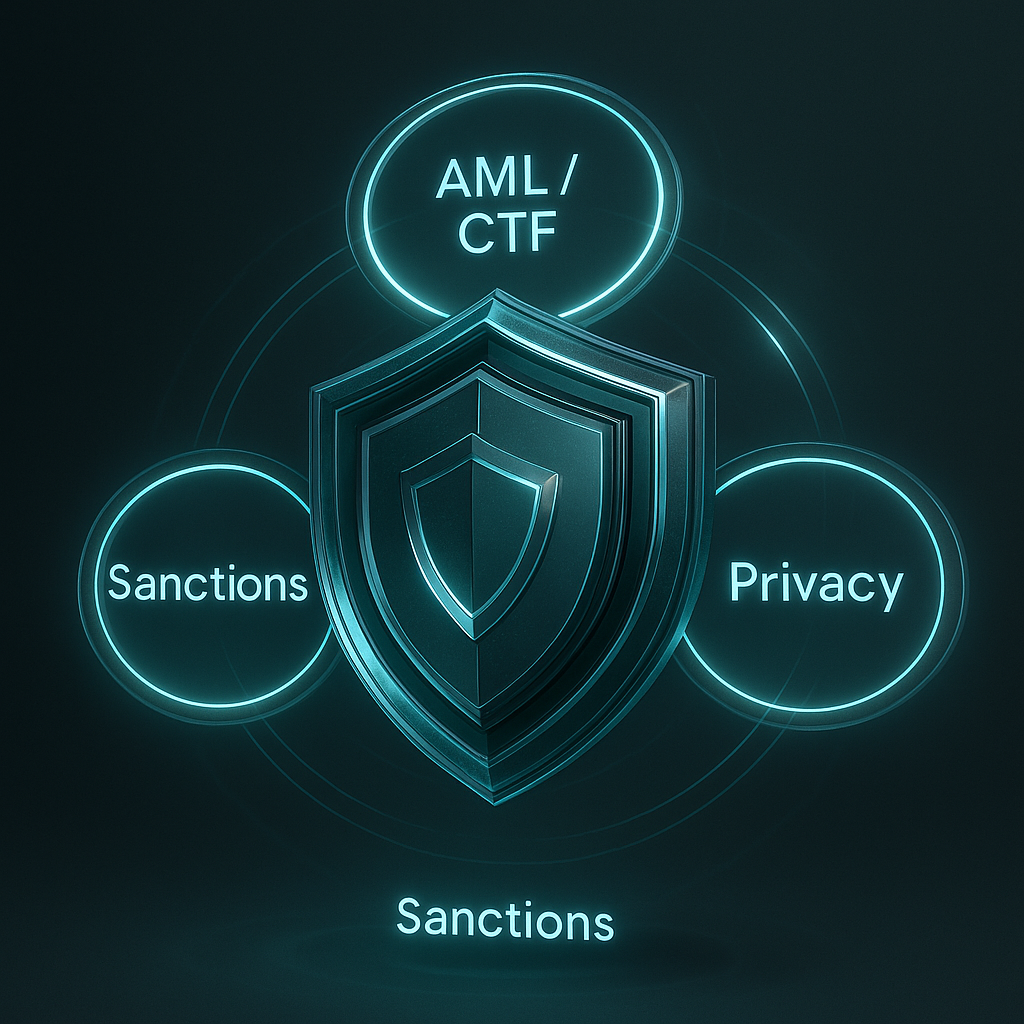
Global standards Xarva aligns with
Xarva is designed for regulated industries, so it aligns with the same global compliance expectations enterprises follow today.
Financial-Crime Standards
- FATF AML / CTF recommendations
- Risk-based transaction monitoring
- Customer due diligence (KYC)
- Business verification (KYB)
- Suspicious activity reporting readiness
Sanctions Compliance
- US sanctions (OFAC-aligned)
- EU consolidated sanctions lists
- UK sanctions (HMT-aligned)
- UN sanctions lists
- Australia DFAT sanctions lists
Privacy & Data Protection
- GDPR (EU)
- CCPA (California)
- PDPA (Singapore)
- LGPD (Brazil)
- Local privacy & retention laws
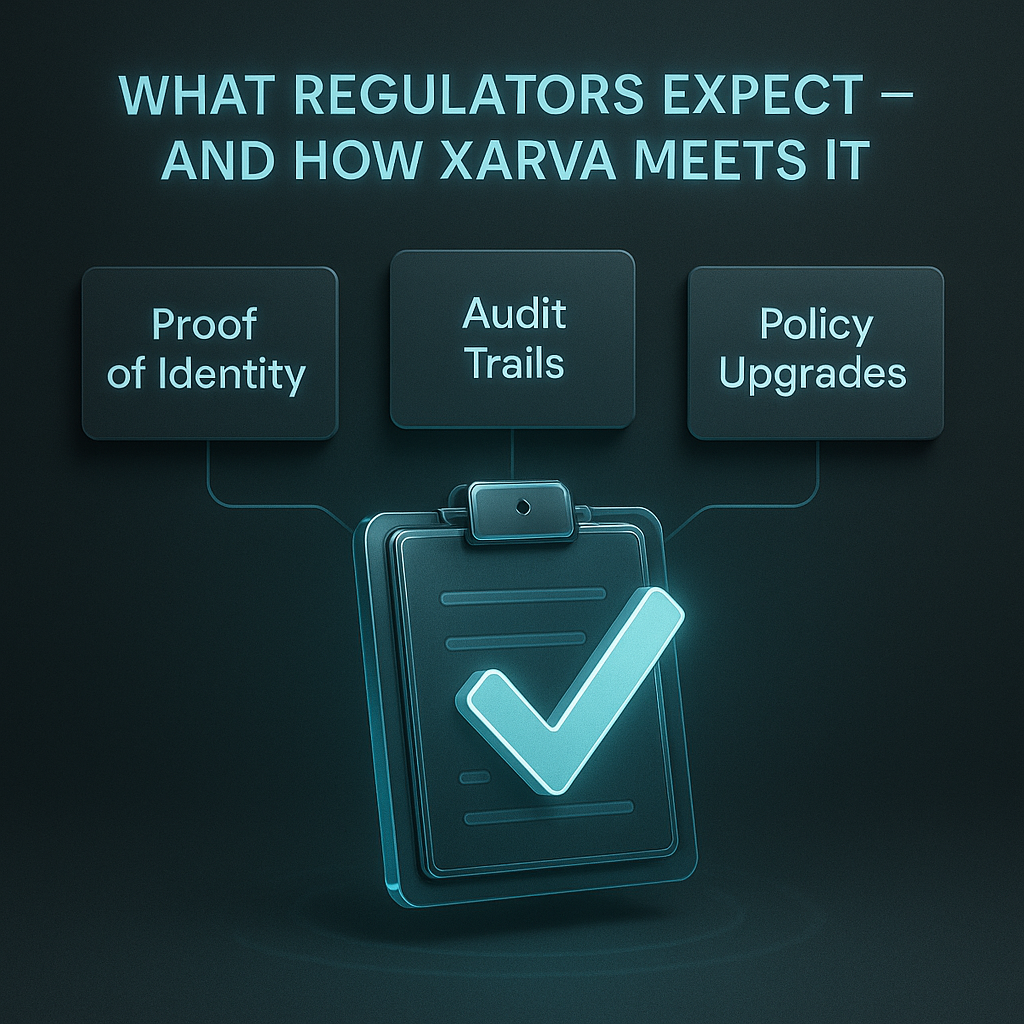
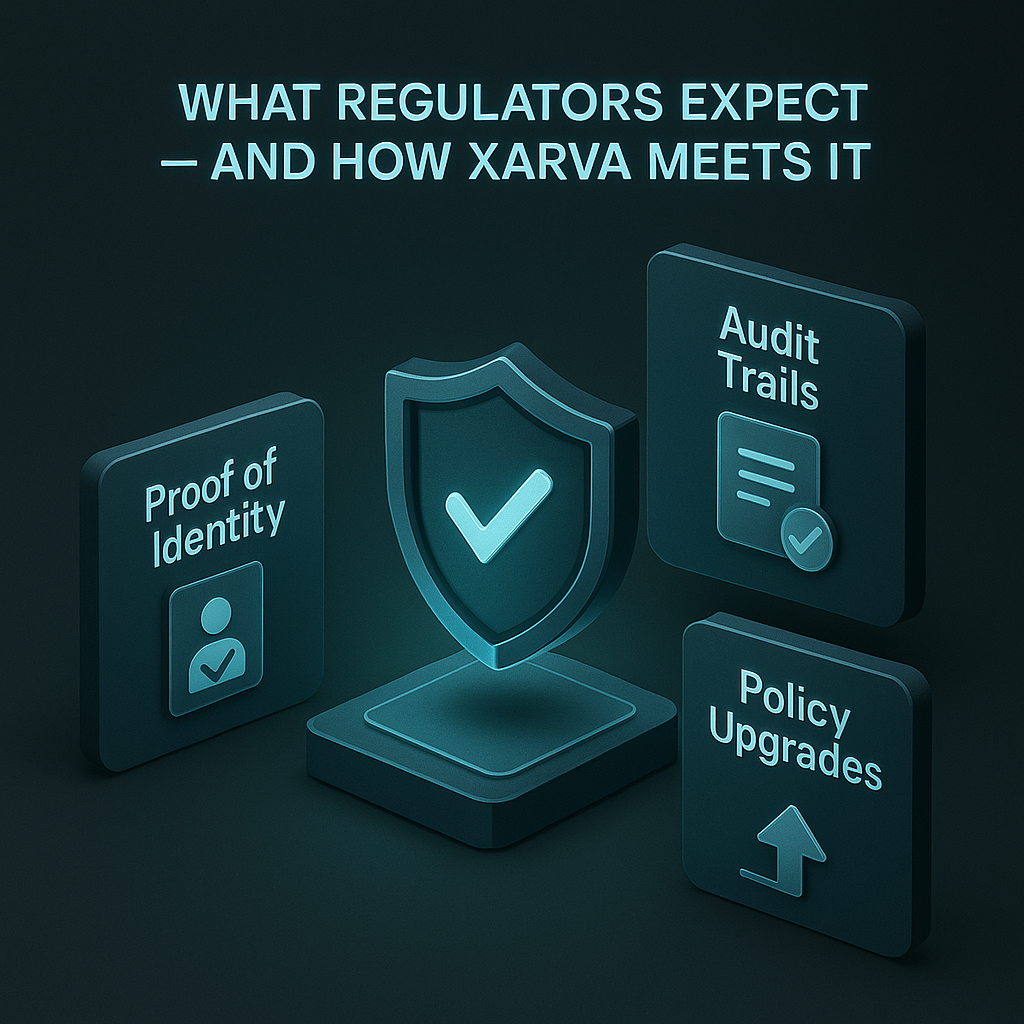
What regulators expect — and how Xarva meets it
Proof of Identity
Regulators need to know who is allowed to transact. Xarva enforces identity checks at execution time through XCVM policy gates.
Audit Trails
Every compliant transaction emits structured on-chain audit events. Enterprises can export these into existing reporting workflows.
Policy Upgrades
Compliance rules change over time. Xarva supports versioned, governance-approved policy updates without hard forks.
Why this matters for enterprises and investors
Enterprise Adoption
Enterprises won’t settle serious volume unless compliance is deterministic. Xarva makes the compliant path the default path.
Lower Regulatory Risk
Built-in KYC, AML, sanctions and Travel Rule enforcement reduces the risk of the network being blocked in regulated markets.
Utility-Aligned Security
PoU rewards validators for verified settlement volume, not speculation. This aligns security with real adoption.
FAQ
Does Xarva store personal data on-chain?
No. Sensitive identity and compliance data are kept off-chain and encrypted. On-chain records store only compliance proofs and audit events.
What happens if a user fails checks?
XCVM blocks execution before the transaction runs, so non-compliant activity cannot settle on the network.
Is Travel Rule supported?
Yes. Xarva supports originator-beneficiary information exchange, tied to jurisdiction rules and audit trails.
Xarva makes compliance simple, automatic, and built into the chain itself — not added on top.