
TECHNOLOGY OVERVIEW
Technology built for real-world, regulated use
Xarva is a Tier-1 Layer-1 blockchain designed for enterprises, telecom operators, and regulated industries. It is built for real settlement, not just speculation.
Compliance, identity checks, and risk controls are built into the core of the chain. In simple terms, Xarva works like a secure, high-speed settlement network where every transaction is checked before it goes through.
Three ideas make Xarva different: a compliance-native virtual machine (XCVM), Proof-of-Utility consensus that links rewards to real usage, and modular scalability so the network can grow without breaking.
In simple terms: Xarva is built so that compliance checks, audit trails, and real utility are part of how the chain works, not added later as an afterthought.
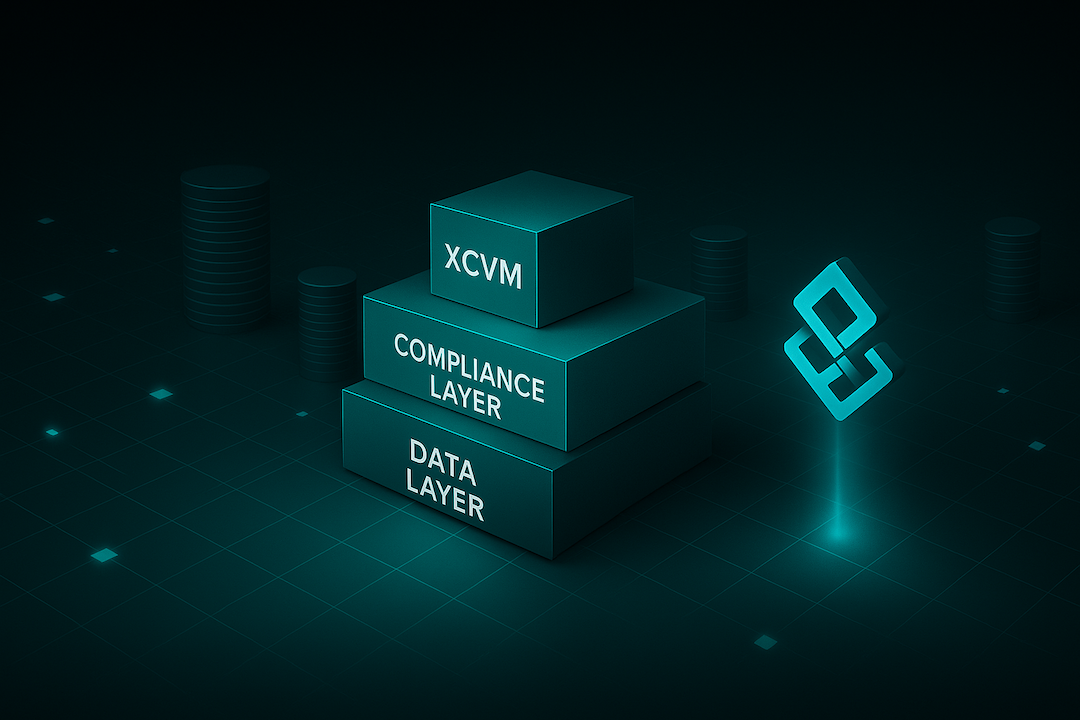
Xarva’s architecture is designed for speed, safety, and regulatory alignment around real settlement flows.
Compliance-native VM (XCVM)
Smart contracts can ask simple questions before they run: "Who is this?", "Are they allowed?", and "Does this follow policy?".
Just like an airport checks documents before letting you board, XCVM checks rules before allowing a transaction to settle.
Proof-of-Utility consensus
Validators still stake to secure the network, but they can earn more when they help real businesses move real settlement volume.
In simple terms, validators are rewarded for useful work, not for sitting idle with stake.
Modular scalability
Execution, data availability, and interoperability are separated. Each layer can grow on its own as demand increases.
This is like adding more lanes to a highway when traffic increases, without changing the destination.
XCVM — compliance-native virtual machine
XCVM is Xarva's biggest advantage. It combines smart contract logic with built-in compliance hooks.
It lets developers plug in identity checks, risk rules, and audit logging directly into their applications. Transactions can be checked against policy before they are confirmed on-chain.
In simple words, XCVM is like a gatekeeper. It checks who is transacting, what they are doing, and whether they are allowed to do it before the transaction is written to the ledger.
For enterprises, this means apps can be compliance-ready from day one. For Xarva, it creates a deep moat: most chains add compliance on top, while Xarva builds it inside the VM.
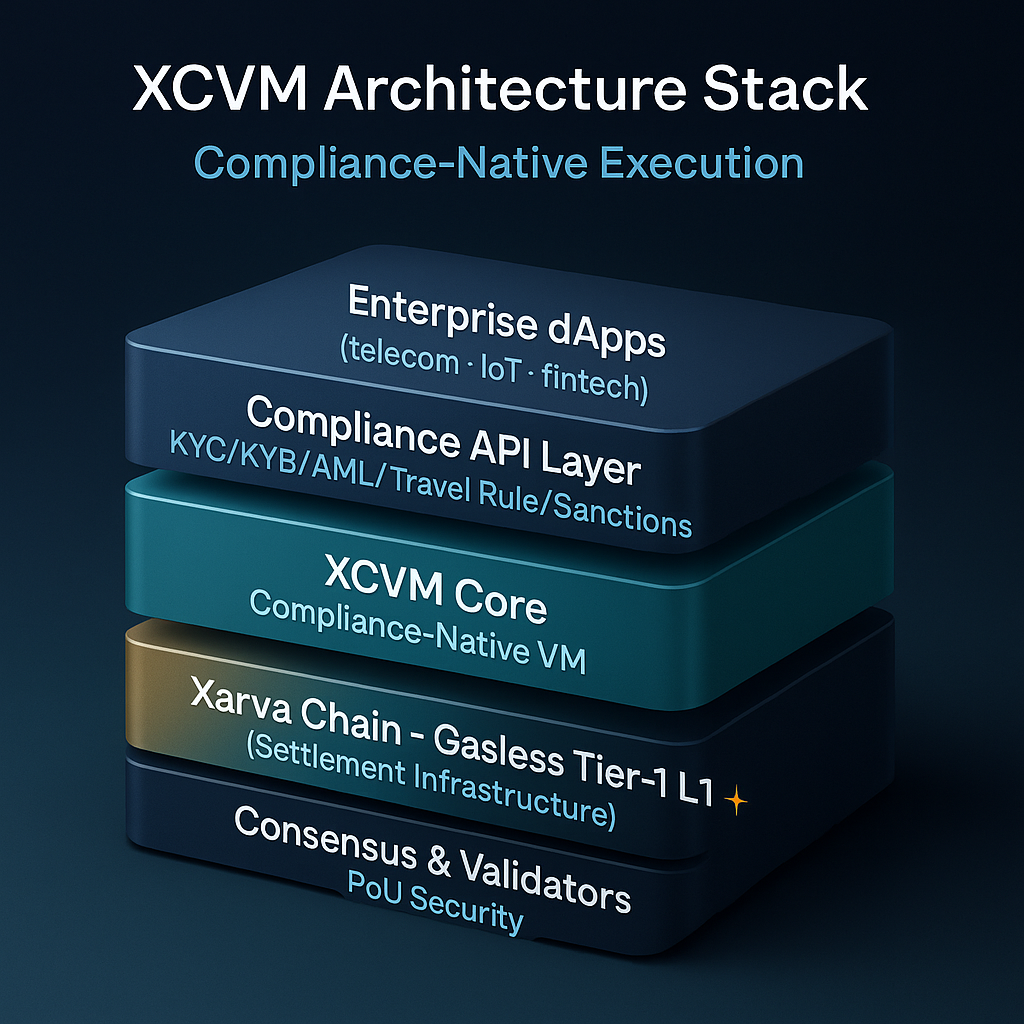
XCVM architecture layers identity, policy, execution, and audit to make policy-aware transactions possible by design.
Proof-of-Utility — rewards tied to real usage
Proof-of-Utility (PoU) builds on the security of stake but links rewards to verified utility on the network.
Validators can be rewarded more when they:
- Process settlement flows from real businesses
- Maintain strong uptime and reliable performance
- Pass behaviour and integrity checks over time
In plain English: validators earn more when they help real companies move real payments, not when they simply exist with idle stake.
This pushes the network toward useful activity, not empty blocks or short-term yield farming.
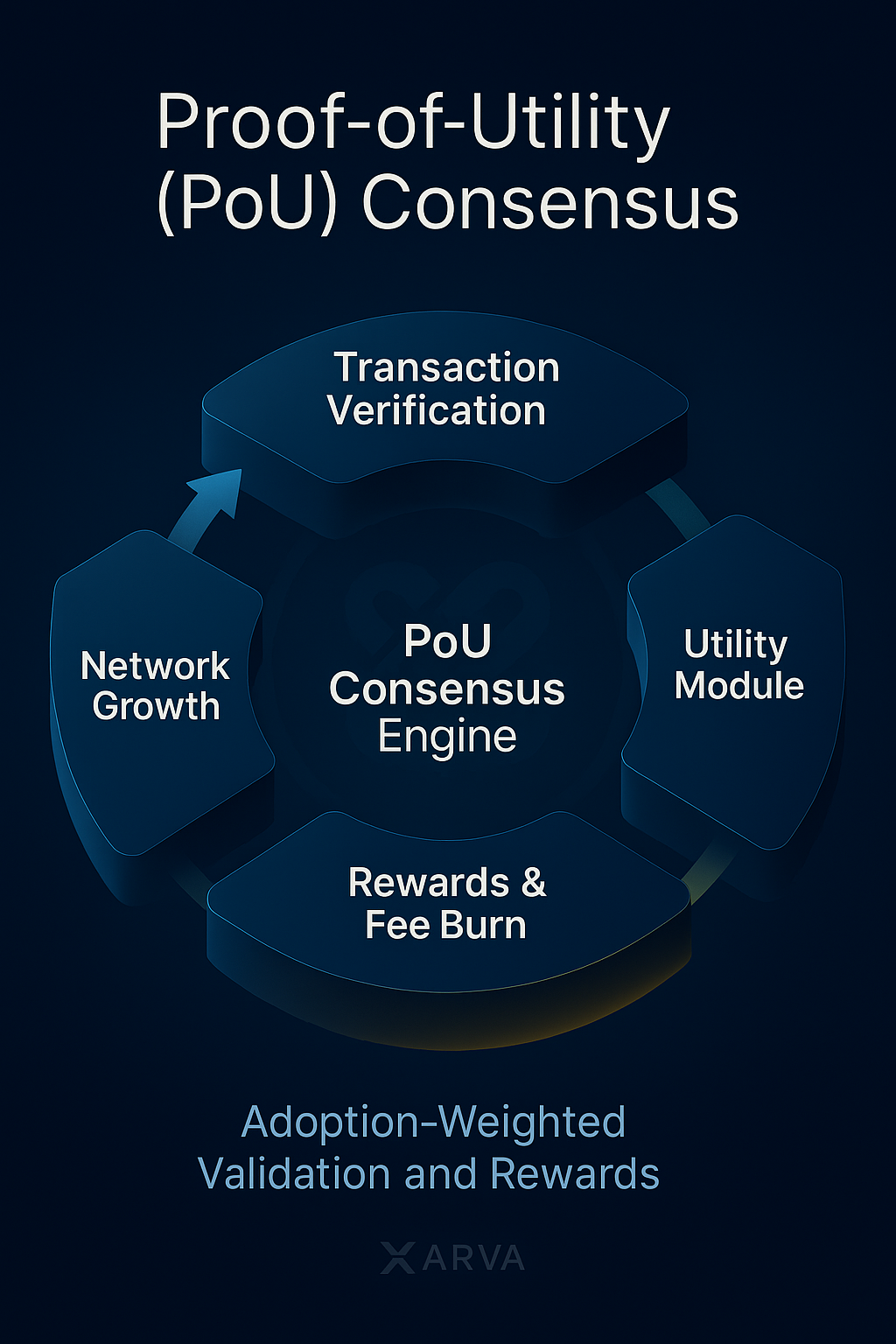
PoU reward flow links stake, validator performance, and real settlement volume to long-term reward weighting.
Modular scalability — built to grow with demand
Xarva uses a modular architecture so each part of the system can scale without disrupting the others.
Execution, data availability, and cross-chain connectivity can scale independently. As settlement volume grows, the network can add more capacity without forcing apps to move or rewrite their code.
In simple terms, if demand increases, Xarva can add more capacity like adding extra servers to a cloud system. The goal is to keep performance and costs as stable and predictable as possible.
For enterprises and telecom operators, this means a path to grow on the same chain, instead of hopping between networks as volume increases.
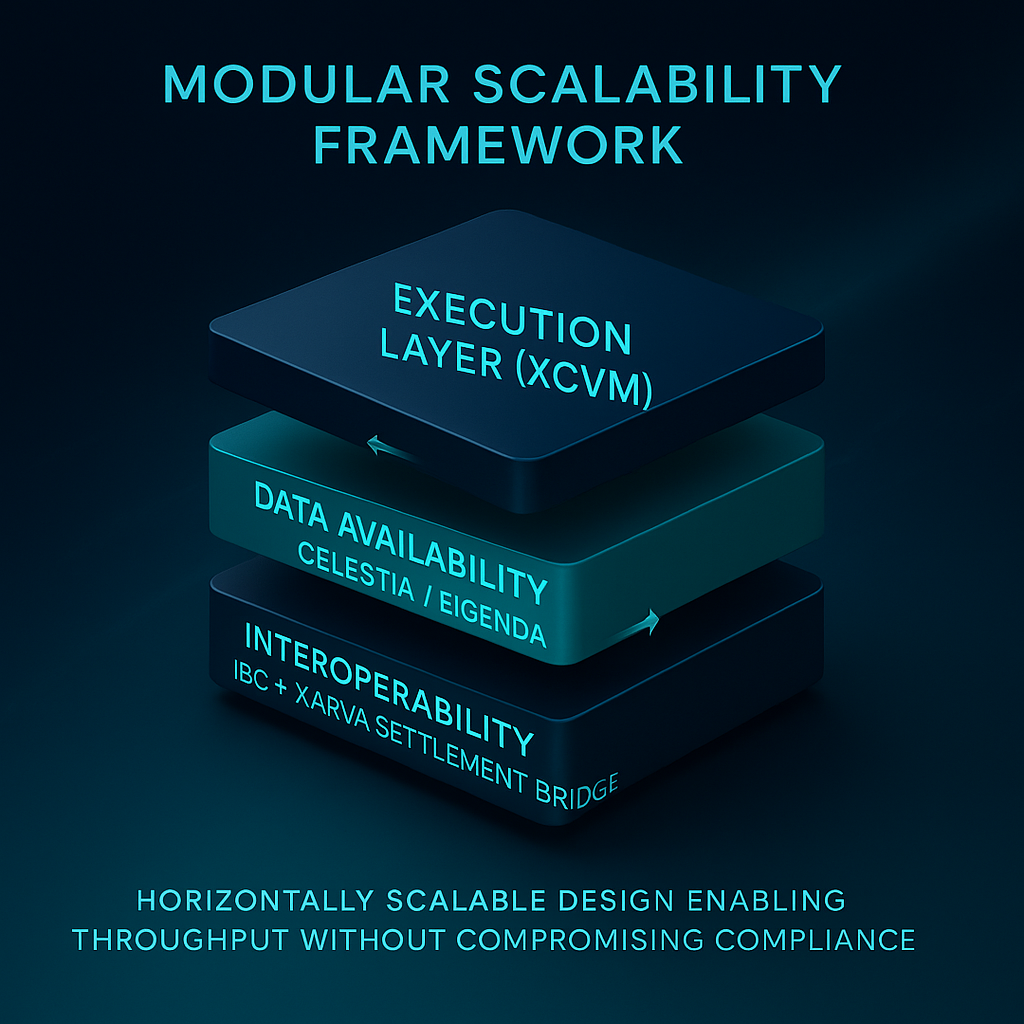
Execution, data, and interoperability layers can scale horizontally to keep settlement predictable as adoption grows.
Why this architecture matters for investors
Xarva is designed for long-term, regulated use cases, not just short-term cycles. The architecture aligns fees, security, and real-world utility.
Built for regulated industries
XCVM and Proof-of-Utility are designed with identity, policy, and audit needs in mind, so that telecoms and other sectors can operate with more confidence on-chain.
Predictable economics
Xarva has a fixed supply of 7 billion XRV and a fee model designed to burn a portion of fees while rewarding validators and sustaining the treasury.
As adoption grows, more real usage can drive more fees, and part of those fees can be burned over time.
Aligned with real companies
The network focuses on real settlement flows and long-term uptime, targeting enterprise-grade reliability rather than one-off spikes in TVL or meme-driven activity.
A defensible, hard-to-copy stack
Combining XCVM, Proof-of-Utility, and modular design makes Xarva harder to replicate. It is not just another EVM chain with different branding, but a purpose-built settlement layer for regulated use.
Why now
Enterprises are moving from pilots to production and need faster invoice settlement, trusted rails, and compliance-ready infrastructure. Xarva is being built to sit at that intersection.
Go deeper into Xarva
For investors and institutions who want to understand how this architecture connects to economics, governance, and real-world adoption, the following pages provide more detail.
ECONOMICS
Review tokenomics
See how supply, fee burn, validator rewards, and treasury flows work together around the XRV token.
REAL-WORLD USE
Explore solutions & use cases
Understand how telecom and other industries can use Xarva for real settlement, not just token transfers.
CAPITAL & GOVERNANCE
For investors & institutions
View the high-level investor narrative, governance model, and paths for institutional participation in the Xarva network.