
An ecosystem built for real-world settlement
Xarva brings together validators, telecom operators, financial institutions and builders around a single, compliance-native Layer-1. Each group plays a clear role: securing the network, settling flows, and shipping applications that can pass institutional due diligence.
- • Validators secure the chain and enforce protocol rules
- • Enterprises plug their traffic and settlement flows into XCVM
- • Developers build apps on top of a policy-aware base layer
Validators & node operators
Validators run the core Xarva infrastructure, participate in consensus and help enforce protocol-level policies. Their role is to keep the network performant, predictable and resilient.
- • Operate validator and settlement nodes
- • Commit blocks and attest to policy outcomes
- • Support high-uptime, low-latency routing
- • Earn XRV rewards for securing the network
Telecom & settlement participants
Network operators, carriers and service providers connect their usage data and settlement flows into XCVM. Xarva is designed to help them move from slow, paper-based reconciliation to near-real-time settlement.
- • Map usage and invoices into on-chain flows
- • Apply policy checks before settlement
- • Reduce disputes and reconciliation overhead
- • Unlock new commercial models around utility
Institutions & liquidity partners
Regulated institutions can use Xarva as an execution layer for tokenized flows and structured products built around real usage. The focus is predictable rules, clear governance and deep on-chain liquidity.
- • Provide liquidity into XRV-based markets
- • Build structured exposure to settlement flows
- • Integrate with compliance-aware staking and vaults
- • Align risk controls with protocol governance
Builders, XDK & app developers
Developers use Xarva's core APIs and the Xarva Developer Kit (XDK) to build wallets, dashboards and vertical apps that speak the same compliance-aware language as the base layer.
- • Connect existing systems via XDK
- • Build explorers, reporting and reconciliation tools
- • Integrate policy-aware smart contracts and XCVM apps
- • Extend Xarva into new industries over time
Infrastructure & data layers
Xarva is designed to sit alongside modern data and infrastructure stacks, from observability and logging to off-chain analytics that feed risk and business insights back into the network.
- • Indexers and analytics services consuming on-chain data
- • Monitoring and alerting for network and validator health
- • Off-chain data pipelines into treasury and finance teams
- • Bridges and interoperability layers where appropriate
Community, grants & programmes
Over time, Xarva will grow a community of builders, researchers and operators who help extend the protocol and ecosystem. Grants and targeted programmes can support high-impact initiatives.
- • Grants for tooling, SDKs and reference apps
- • Incentives for ecosystem education and documentation
- • Programmes focused on telecom and infrastructure use-cases
- • Community input into roadmap and governance
Why the Ecosystem Design Matters
The core idea behind Xarva's ecosystem is straightforward: the network is built around real economic activity— not only secondary-market trading. Validators, businesses and builders all depend on the network working in a clean, predictable way.
- • Demand for XRV is designed to be linked to real settlement flows and network usage, rather than purely speculative activity.
- • Governance and compliance are part of the design, not bolt-on middleware, which can support institutional comfort over time.
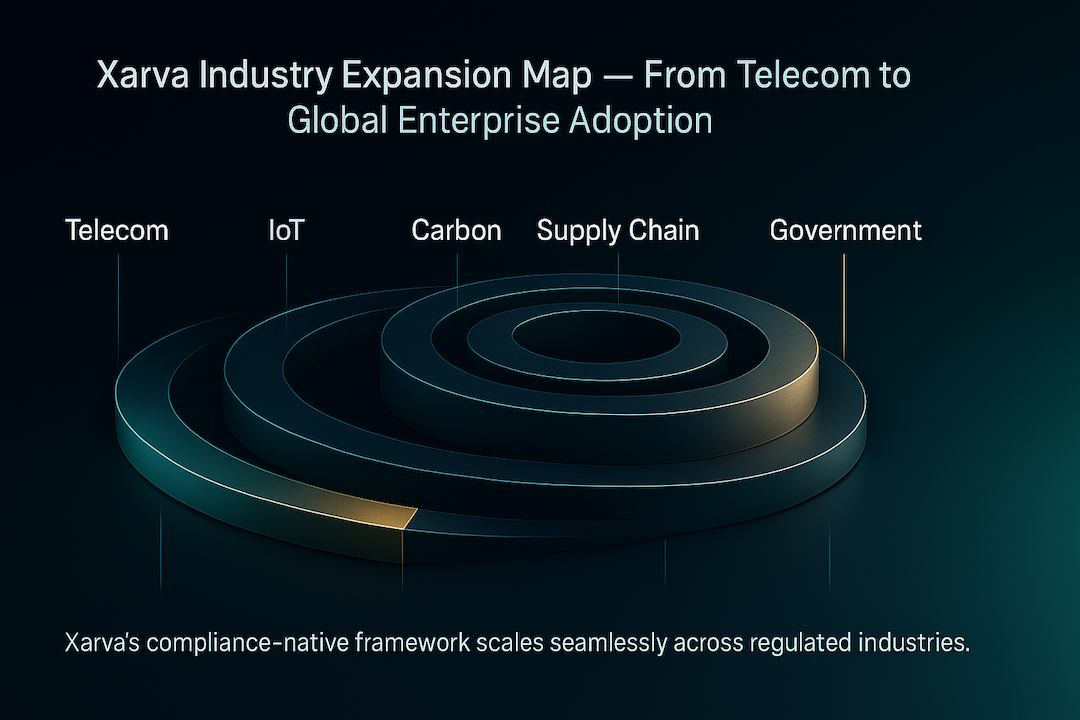
- • A modular architecture means the ecosystem can expand into new industries while keeping the same core settlement and policy layer.
These are forward-looking design goals, not guarantees of future performance, returns or market conditions.